

Guatemala Seis Manos 2.0


GUATEMALA
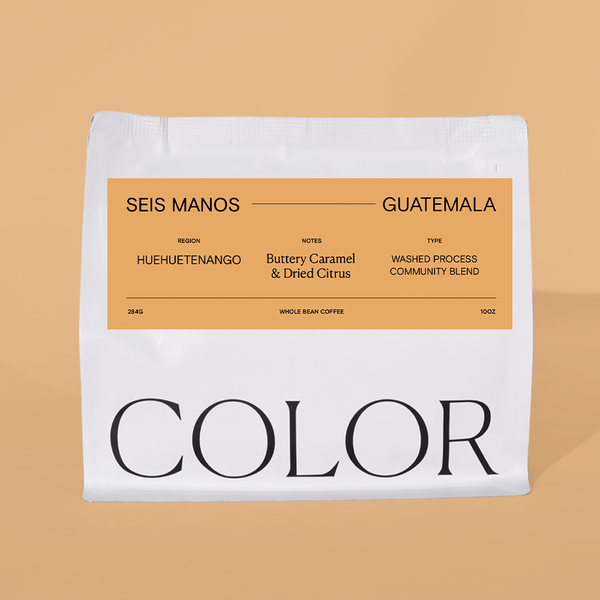
SEIS MANOS
BUTTERY TOFFEE, DRIED CITRUS, DRIED APRICOT + CHOCOLATE MILKSHAKE
BEAN DETAILS:
ORIGIN: Huehuetenango, Guatemala
PRODUCER: Antonio Martínez, Erick Perez, Cruz Perez (to name a few)
ELEVATION: 1,560 - 1,800 masl
PROCESS: Washed
TASTING NOTES: Buttery toffee, dried citrus, dried apricot, and chocolate milkshake.
ROAST TYPE: Light
Farm Level
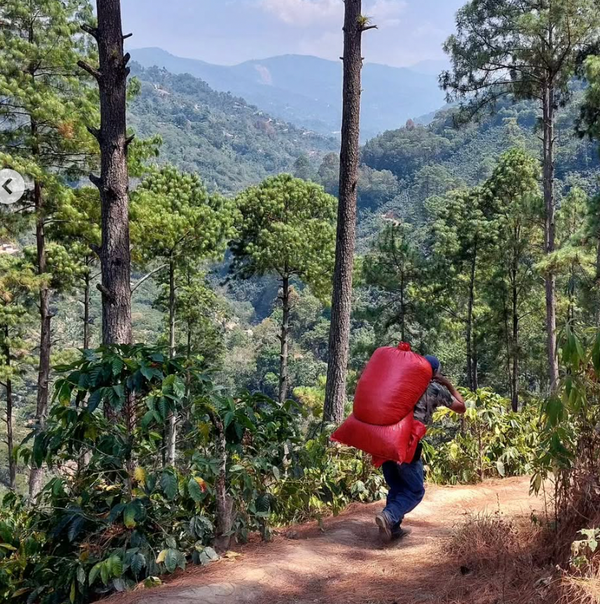
Huehuetenango is an ideal place to grow coffee—limestone soils, high mountain altitudes, cold nights, and hot days all come together to allow for the production of high-quality coffee. Our coffees from Guatemala sometimes arrive a bit later in the year because we're waiting for the coffees from Huehuetenango to ripen and be processed, and we're committed to waiting for our partner producers' last pickings to dry so that we can pay premium prices for their lots. This is an area where small farmers process and dry their own coffee, as opposed to selling red cherries to the local coyote. Selling dry parchment coffee allows smallholders to capture the largest portion of value possible.
This blend represents our purchasing commitment in action—we want to ensure that we can purchase a wide variety of coffees from long-term producer partners, including coffees that perform best when blended together. Traditional sourcing models often reward only a small portion of a producer's harvest—the very highest-scoring microlots—while the rest is left behind or undervalued. With long-term relationships and clear communication during the harvest season, the producers we work with know they can count on us to purchase a range of their coffees, and they process their cherries carefully, knowing their work will be fairly valued and compensated.
The 2025 purchasing season was challenging—volatile coffee prices created incentives for many producers without obvious buyers to pick cherries quickly to take advantage of high prices in an uncertain context. High fertilizer prices and inflation continued to keep producers' costs elevated this season.
About a few of the contributors to this community lot:
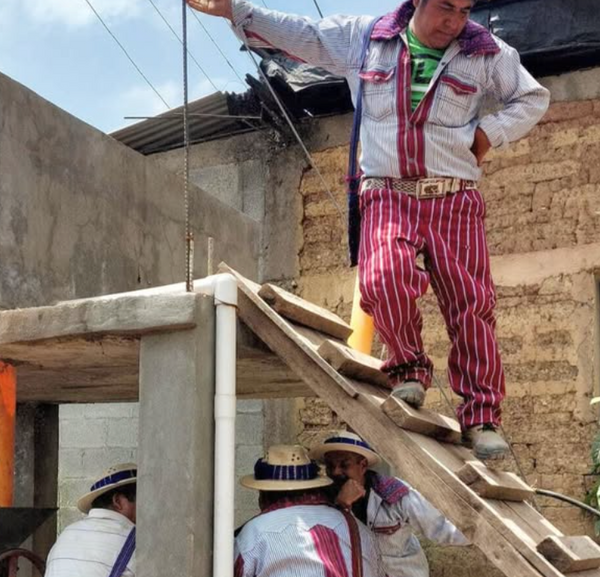
Antonio Martínez is a second-generation coffee producer from El Chalum, Huehuetenango. He manages two lots—Cerro Verde and Lote de la Finca—planted with Bourbon, Caturra, San Ramón, and Gesha. Antonio is relatively new to specialty coffee yet already committed to experimentation and quality, using terracing, soil testing, and a blend of organic and chemical fertilization to improve plant health and yields. He oversees processing and shares physical infrastructure with his father, Jorge. Labor shortages and input costs were the key challenges of the season.
Erick Perez contributed two lots from separate parcels: Las Cuevas (the largest of his lots) at 1,800 masl, and his smaller plot called Las Ventanas at 1,560 masl in Hoja Blanca. Erick works alongside his father Adiel to process his coffee, and he has been pushing his family to focus on quality processing. They process all of their coffee at a wet mill across the street from the family home, using a screen to keep under- and over-ripe cherries out of the fermentation tank and fermenting the coffee carefully to prevent the coffee mass from getting too hot. They grow Caturra and Bourbon varieties on their parcels.
Cruz Perez is in charge of commercializing the ASDEFLOR association's coffee. His coffee parcels sit at an average altitude of 1,700 masl and are home to Caturra, Bourbon, and Villa Sarchí varieties. Don Cruz championed the construction of the association's collective wet mill, which features large concrete tanks, patio space, and African beds. This wet mill has elevated the quality of individual producers' coffees, many of whom don't have reliable access to electricity, clean water, or proper drying facilities to process their excellent cherries to specialty standards.
Brew Guide
Filter & Espresso
You bought great coffee. Brew it that way. Below is how we approach extraction at Color — built from years of roasting, tasting, and a lot of dialing in on our favorite brewers: Hoop, Pulsar, UFO, and Origami Air.
Brew how you’d like — but if you want it how we taste it, start here.
REST
Great coffee changes over time. Don’t rush it.
Filter:
→ 2–6 weeks off roast
→ Sweet spot: 3.5–6 weeks
This is where things get cleaner, riper, and more clear. Fruit tones deepen. Structure gets polished and the finish cleans up.
Espresso:
→ 4–6 weeks off roast
You can pull earlier. It’ll be brighter and aromatic. Around week 4, it rounds out and gains density.
If you enjoy tasting evolution like me, just keep brewing and wait for it to get better!
WATER
Water matters more than most variables. We QC with TWW at full strength, the light roast profile, but these coffees truly sparkle with most soft water profiles. Most mountain water is hard so be sure to adjust accordingly. Definitely filter out chlorine and sulfur if using tap water. Apex is making some really cool water drops!
Ideal Range:
→ 30–80 ppm
→ Moderate alkalinity
→ Balanced calcium/magnesium
Softer water increases clarity and perceived sweetness. Harder water can flatten acidity and mute top notes as well as muddy the finish.
FILTER BREWING
Core Philosophy
- Even extraction > aggressive agitation
- Minimize channeling
- Control flow rate
- Your taste is the most important factor!
- Bed Depth is critical, check out Jonathan Gagne’s thoughts on this
We aim for:
- Extraction Yield: 20–23%
- TDS: 1.35–1.55
- Clean, structured sweetness
- The least amount of astringency possible
- No hollow center, flat beds
RATIO
We cup at 1:17
For brewing, we gravitate toward:
- 1:16 – 1:17
- Personal favorite: 1:16.75
- If the coffee is ultra-dense or fruit-forward, push toward 1:17. If you want more saturation and body, lean toward 1:16.
GRIND
Medium-fine for most flat-bottom / hybrid brewers.
You should see:
- Even drawdown
- No stalling
- No rushing
- See Jonathan Gagne’s bed depth post
If it tastes:
- Sour → grind finer or reduce chanelling
- Bitter/astringent/dry → grind coarser
- Thin → increase extraction (finer or hotter water)
BREWERS WE LOVE
Hoop
Low agitation. High clarity. One pour.
Let gravity do the work. Make sure to break the crust when you finish pouring.
Use a metal aeropress filter if you’re struggling with choking and/or slow draw downs.
Pulsar
Excellent for brewing for 2 people.
Aim for doses 25g - 30g to reduce channeling risk.
Bloom with the valve closed. Open after the first pour.
UFO
Expressive, modern clarity.
Great for highlighting fruit structure. Forgiving.
We love the sibarist filters.
Origami Air
Run conical filters for clarity, flat-bottom for structure.
Control your pour pattern — even spirals, minimal disturbance.
Thermally stable, easy pour over option.
POUR OVER POUR STRUCTURE (General Framework)
For a 1:16–1:17 brew:
- Bloom: 2–3x coffee weight (45–60g for 21.5g dose)
- 60 sec bloom
- 2–3 controlled center-out pours
- Avoid heavy swirling or stirring
- Let it draw down naturally with a light rattle after the last pour. Agitation increases extraction — use it intentionally.
ESPRESSO
Rest longer. Be patient.
Starting Parameters:
- 1:2 – 1:2.5 ratio
- 25–35 sec
- 93–95°C
- Adjust based on roast level and density
These coffees often open up at slightly higher extraction. Don’t be afraid of longer shots if they remain sweet and structured. More shot volume = more extraction.
You’re looking for:
- Dense sweetness
- No harsh finish
- Lingering fruit or chocolate clarity
- Structured acidity, not sharpness
If it’s thin → grind finer or increase ratio
If it’s harsh → coarsen or lower temp slightly
WHAT WE’RE TASTING AT OPTIMAL EXTRACTION
- Saturated sweetness
- Clear fruit articulation
- No hollow mid-palate
- Weight without heaviness
- Long finish
When you hit it right, it feels polished. Not loud. Not dull. Just complete.
FINAL NOTES
- Rest matters.
- Water matters more.
- Extraction is measurable.
- But taste is king.
Brew whenever you’d like. Track changes. Stay curious.
If you dial something incredible on your Hoop, Pulsar, UFO, or Origami Air — tell us.
We’re always chasing better coffee.
— Color Coffee
Coffee Faq
IS YOUR COFFEE ORGANIC OR FAIR TRADE?
In many cases, yes. However, our first priority is quality and flavor. Sometimes these priorities align and our producers are certified organic and/or fair trade. We always pay well above fair trade rates (which are quite low and don’t guarantee sustainability or quality).
Often times, the producers we work with are too small to gain certifications. It’s expensive and laborious. Many of our producers are certified organic and fair trade, including many of our producers in Peru, Ethiopia, and Mexico.
WHAT IS THE BEST TIME-FRAME TO DRINK MY COFFEE?
We recommend drinking our coffee within one month of the roast date. Most of our coffees taste best however within 2 - 14 days of roast date.
For espresso, we recommend using coffee that has rested at least 7 days after roast date. This is because coffee gives off CO2 after roasting that can interfere with extraction. One way to get around this is to let your ground espresso dose sit for 30-120 minutes before pulling the shot. Email info@colorroasters.com for more questions about this.
If you are pre-grinding the coffee, we recommend drinking the coffee within one week of grinding.
CAN YOU GRIND MY COFFEE ON WEB ORDERS?
Yes, we can. Please select how you want your coffee to be ground at the time you place your order. Simply click on the arrow beside "Grind" and make your selection. If you need help choosing let us know the brewing method you will be using to prepare the coffee, in the notes of the order. And we will be happy to grind the coffee for you on our commercial grinder.
DO YOU HAVE BREW RECIPES?
These are in the works! We are compiling a bunch and even shooting some video, to help you brew like us at home.
In the meantime...go here: Pour Overs | Aeropress to get some expert advice.
MY COFFEE TASTES WEAK, WHAT'S THE PROBLEM?